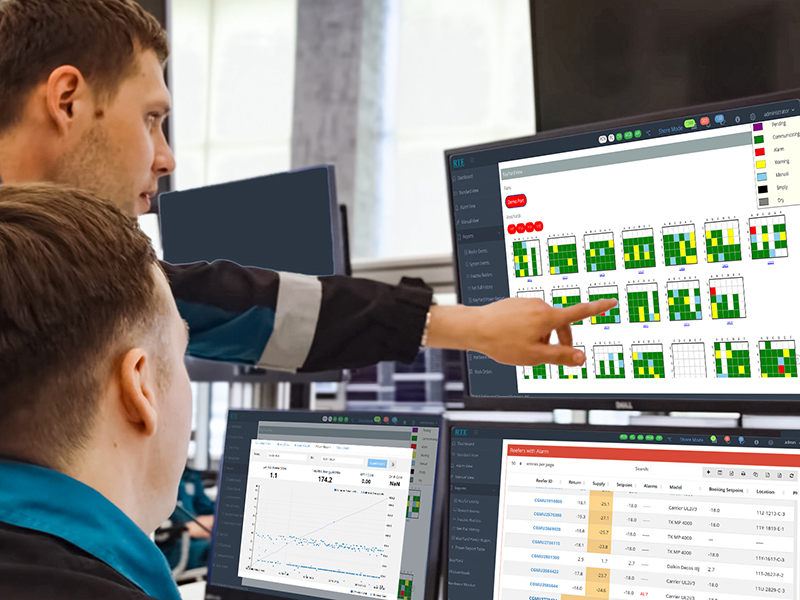

Turn reefer electrical power usage into a revenue generator with RRCE-PM.
Precision you can invoice on, RRCE-PM is a calibrated, traceable monitoring system built for terminals where electricity is a billable resource. It’s accurate, integrated, and operator-friendly.
Revenue-Grade
Reefer power monitoring for 100% calibrated and traceable data
Real Billing Accuracy

Precision data beyond standard power estimates
Supports Cost Recovery

Auditable, customer-specific energy usage information for transparent invoicing
Track reefer power. Catch issues early. Invoice with confidence.
When billing for electrical usage of stored reefers, some metrics matter more than others. Here’s what to prioritize—and why.
| Metric | Why It Matters |
|---|---|
| Power Usage (kWh) | The actual energy consumed—the core metric for most billing systems. |
| Watts (Total) | Measures real power; used to calculate energy usage over time. |
| Average On-Peak Cost | Determines cost during high-demand periods—key for time-of-use billing. |
| Average Off-Peak Cost | Same as above, but for low-demand periods |
| Apparent Power (VA) | Total power drawn; utilities may bill based on peak demand (kVA) |
| Power Factor (PF) | Low PF means poor efficiency—can trigger extra charges. |
| Total Connection Time | Helps correlate usage patterns and validate billing cycles |
Need more information? RRCE-PM collects metrics that run even deeper.
Important Metrics for Power Quality & Demand Charges
These influence how the charges are applied, especially if demand charges or power factor penalties exist:
| Metric | Why It Matters |
| Apparent Power (VA) | Total power drawn; utilities may bill based on peak demand (kVA). |
| Reactive Power (VAR) | Indicates inefficiencies; high VAR can lead to penalties. |
| Power Factor (PF) | Low PF means poor efficiency—can trigger extra charges. |
Useful Metrics for Diagnostics & Load Balancing
These help you understand system behavior but aren’t typically used for billing:
| Metric | Why It Matters |
| Voltage (AΦ, BΦ, CΦ) | Ensures equipment is operating within safe limits. |
| Line Voltage (AB, BC, CA) | Useful for detecting imbalances or faults. |
| Amps (Total, A, B, C) | Helps identify overloaded circuits or uneven phase loading. |
| VA / VAR by Phase | Good for phase-level analysis, not billing. |
Key Operational Advantages
- Live power metrics to detect issues fast and avoid downtime
- Granular usage and peak cost tracking for smarter energy control
- Accurate data by reefer or full yard to support workload balancing
- Digitally logged records that back up customer billing and claims
- Easy-to-read trends for performance checks and cost planning
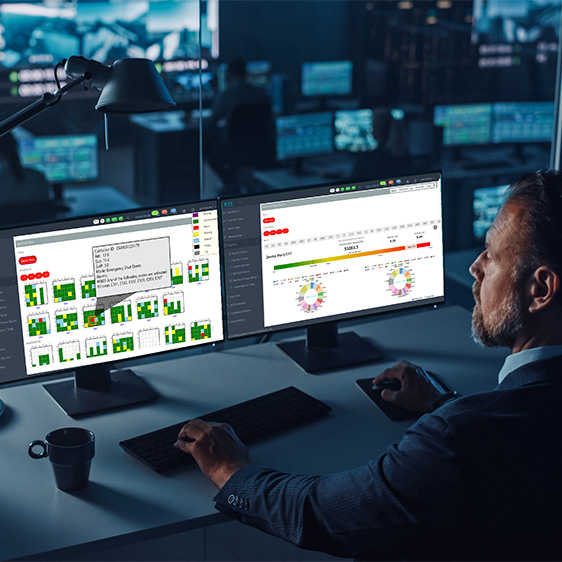
No more guesswork. No more disputes.
Deploy RRCE-PM and take control of reefer power accountability today.
Related System Components
- GRASP™ Reefer Monitoring & Management Software Platform
The command window to your RTE reefer monitoring universe—intelligent, intuitive, and in control.
Explore GRASP