

What operators need to know as temperature traceability expectations shift across the food chain
The FDA’s Food Traceability Rule (FSMA 204) is reshaping how the food industry captures, stores, and shares data. Whether you’re a grower, processor, distributor, cold storage facility, or grocery retailer, the rule requires standardized Key Data Elements (KDEs) at specific Critical Tracking Events (CTEs) to enable faster, more accurate tracebacks.
The FDA’s goal is clear: improve food safety by enabling rapid identification and removal of potentially contaminated food from the market. FSMA 204 requires companies to provide traceability records to the FDA within 24 hours during an investigation .
But here’s the operational truth:
Traceability is only as strong as the temperature data behind it.
Temperature integrity isn’t explicitly listed as a KDE — but it directly influences product safety, recall decisions, and supplier credibility. That’s where R‑TEL temperature data loggers become essential.
Is FSMA 204 Being Enforced Yet?
FSMA 204 is finalized, but enforcement is paused until July 20, 2028, giving operators time to strengthen their traceability and temperature‑control programs.
Here’s what you need to know now.
Why Temperature Data Matters for FSMA 204 Compliance
Temperature control sits at the center of product safety, even though it isn’t listed as a Key Data Element (KDE) in FSMA 204. Every KDE you capture — from shipping and receiving to transformation and creation — assumes the product remained within safe temperature limits. When temperature integrity breaks, traceability breaks with it. That’s why operators are tightening their temperature monitoring programs as they prepare for FSMA 204.
What Foods Are on the Food Traceability List (FTL)?
FSMA 204 doesn’t apply to all “high‑risk foods.” It applies specifically to foods on the FDA’s Food Traceability List (FTL) — categories selected using a risk‑ranking model based on contamination likelihood and public‑health impact.
Here’s a clear snapshot of the major food groups on the FTL:
Major foods on the FTL include:
- Soft and semi‑soft cheeses
- Shell eggs
- Nut butters
- Fresh cucumbers
- Fresh herbs
- Leafy greens
- Finfish and seafood
- Ready‑to‑eat refrigerated deli salads
These categories also extend to foods that contain listed items as ingredients, as long as the ingredient remains in the same form (e.g., fresh).
Note: If your operation manufactures, processes, packs, or holds any of these foods, FSMA 204’s traceability requirements apply. If not, you’re outside the scope of the rule.
Understanding which foods fall under FSMA 204 sets the scope — but compliance isn’t just about capturing KDEs for FTL products. It’s about proving those products stayed within safe temperature limits at every point in the chain. Temperature integrity becomes the supporting layer that gives your traceability records credibility and strengthens every KDE you capture.
1. Temperature Integrity Supports KDE Accuracy
FSMA 204 requires accurate KDEs at shipping, receiving, transformation, and creation events. While temperature isn’t a KDE, it is a supporting data layer that validates product safety at each CTE.
R-TEL Temperature Data Loggers provide:
- Time‑stamped temperature histories
- High‑density data (up to 33,000 points)
- Instant visual indicators for receiving teams
- PDF/CSV reports that can be attached to traceability records
This strengthens the KDEs captured at each event and supports audit‑ready documentation.
2. Faster Response During Investigations
FSMA 204 requires companies to produce traceability records within 24 hours.
Temperature data is often the deciding factor in:
- Whether product can be released
- Whether a recall is necessary
- Whether a supplier remains approved
R-TEL’s single‑use design and instant reporting allow QA teams to pull temperature histories immediately — no software, no pairing, no delays.
3. Interoperability With Traceability Platforms
Industry groups like GS1 US and GCCA emphasize the need for interoperable, standardized data to meet FSMA 204 requirements. GS1’s FSMA 204 Toolkit outlines how KDEs and CTEs should be structured for digital traceability systems.
R-TEL’s structured PDF/CSV outputs integrate cleanly with:
- GS1‑based traceability systems
- Supplier compliance platforms (TraceGains, ReposiTrak)
- Retailer onboarding portals
- Internal QA documentation workflow
This makes R-TEL monitoring devices a plug‑and‑play temperature‑integrity layer for any traceability program.
4. Strengthening Supplier Readiness
FSMA 204 is pushing buyers to prefer suppliers who can prove temperature control and documentation readiness.
R-TEL helps suppliers demonstrate:
- Temperature integrity from origin to delivery
- Compliance with customer expectations
- Readiness for FSMA 204 audits
- Ability to provide supporting documentation quickly
In a world where traceability is becoming a competitive differentiator, R-TEL gives food/grocery suppliers a simple, credible advantage.
Operational Scenarios Across the Food Chain
Receiving at Grocery DCs
A pallet of berries arrives with an R‑TEL attached.
The indicator shows a temperature excursion.
Receiving logs the KDE, attaches the R‑TEL report, and initiates a QA hold.
Foodservice Distribution
Multi‑stop routes introduce risk.
R-TEL provides a continuous temperature record across the entire route, supporting KDEs at each transfer.
Cold Storage Warehouses
Holding is a CTE.
R-TEL data validates that product remained within safe ranges during storage, supporting customer audits and traceability documentation.
Growers / Packers / Processors
Transformation events require precise KDE capture.
R-TEL provides temperature integrity proof from harvest through pack‑out.
How R-TEL Strengthens FSMA 204 Programs
R-TEL Delivers:
- Product‑level temperature monitoring
- Instant visual indicators for receiving teams
- High‑density data for granular traceability
- PDF/CSV reports for KDE documentation
- A contamination‑free, single‑use design
- Seamless integration with traceability platforms
R-TEL devices don’t replace your traceability system — they strengthen it.
Glossary
FSMA 204 — The FDA’s Food Traceability Rule requiring standardized KDEs at CTEs.
Food Traceability List (FTL) — High‑risk foods requiring enhanced traceability.
KDE (Key Data Element) — Required data fields captured at each CTE.
CTE (Critical Tracking Event) — Points in the supply chain where KDEs must be recorded.
Traceability Lot Code — A unique identifier linking product to its traceability records.
Interoperability — The ability for systems to exchange and interpret shared data.
Temperature Excursion — When product exceeds safe temperature thresholds high or low
FAQs
What is FSMA 204?
FSMA 204 is the FDA’s Food Traceability Rule requiring standardized data capture across the supply chain to enable faster, more accurate tracebacks.
Does FSMA 204 require temperature monitoring?
Temperature is not a KDE, but it is a critical supporting data layer that influences product safety, recall decisions, and supplier approval.
Do R-TEL reports integrate with traceability platforms?
Yes. R-TEL outputs are compatible with GS1‑based systems and supplier compliance platforms.
Who needs FSMA 204 compliance?
Growers, processors, distributors, cold storage facilities, foodservice distributors, and grocery retailers handling foods on the FTL.
Learn More
Explore related topics to strengthen your temperature monitoring strategy:
• RTE Reintroduces the RTEL Brand of Temperature Indicators and Data Loggers
• RTEL cold-chain visibility for agriculture and grocery supply
• GCCA joins FSMA 204 collaboration to improve food traceability across the cold chain
• US FDA Food Traceability List
Latest blog posts
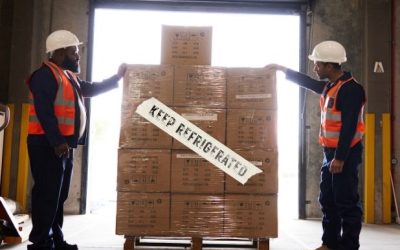
Where cold-chain failures really happen
Cold‑chain failures hide in the gaps—loading docks, transfers, last‑mile handling. Product‑level temperature data reveals excursions, protects shipments, and gives shippers defensible proof.

Reefer Failures Are Expensive – Automation Stops Them Before They Start
Reefer growth isn’t solved by only adding more plugs. Reefers are live assets that demand real‑time monitoring, not manual checks. Learn why automated visibility, instant alerts, and remote control are now baseline infrastructure for terminals facing rising cold‑chain demand.
Why “More Plugs” Still Isn’t the Solution for Reefer Growth
Reefer growth isn’t solved by only adding more plugs. Reefers are live assets that demand real‑time monitoring, not manual checks. Learn why automated visibility, instant alerts, and remote control are now baseline infrastructure for terminals facing rising cold‑chain demand.

The Hidden Cost of One Missed Reefer Alarm
The most dangerous alarm is the one no one sees. Missed alerts → aging issues → preventable failures. Let’s break down why critical signals slip through the cracks and how high‑performing yards 𝘀𝘁𝗼𝗽 𝘁𝗵𝗲 𝗱𝗼𝗺𝗶𝗻𝗼𝗲𝘀 before they fall.