

From a specialty tool to core terminal infrastructure, here’s why automated reefer monitoring is shifting the scales.
For years, automated reefer monitoring felt like it operated on its own, a necessary workflow, but one just out of sync with the rest of the terminal operation. Today, operators are beginning to see the bigger picture. Reefer volumes are rising, the labor workforce is tightening, and customers are increasingly expecting transparency.
Reefer data is no longer specialty data. It’s now moved into operational data as terminals rethink how the collected reefer information fits into their overall digital ecosystem. As of this writing, TOC Europe 2026 is right around the corner. And we have heard from recent clients that they are no longer simply asking how to monitor their reefers more efficiently; the questions now are:
-
How can reefer data inform our terminal-wide planning?
-
What about reducing risk for both our personnel and cargo?
-
And how might it strengthen our entire terminal’s decision-making process?
These thoughts will surely be front and center stage for many attendees.
Here’s what’s driving this change.
1. Reefer data is now part of the terminal’s operational heartbeat
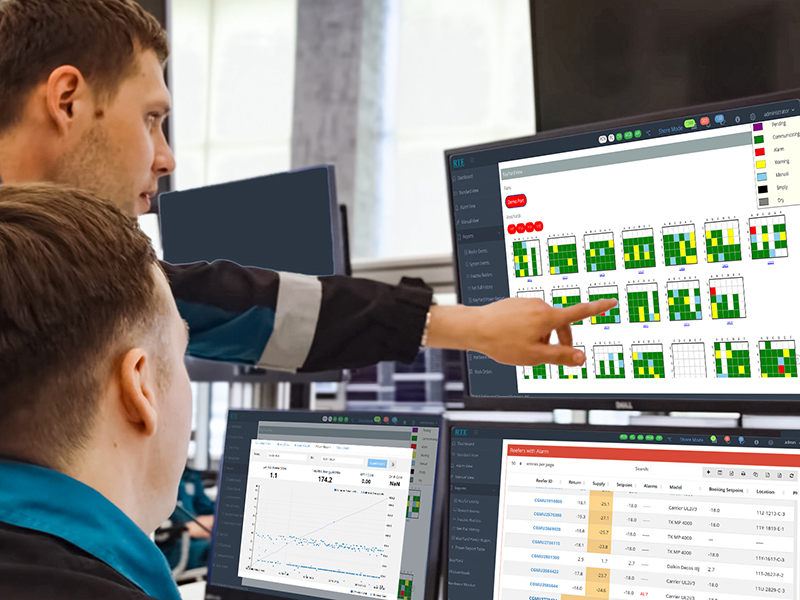
Every reefer reading is a snapshot of risk, energy demand, and asset status. When that information sits in a silo, it’s useful. But it’s also limited. When data flows into the TOS or any other stakeholder system, it transforms into something else entirely: a real-time operational signal that terminals can use to:
-
Validate yard plans against actual plug-in behavior
What looked good on paper rarely plays out exactly as planned. Real time reefer data shows where containers actually get plugged in, comparing this data to where you expected the reefer to be. This reveals challenges and helps terminals update their layout, current labor allocation, and energy management.
-
Spot energy spikes before they hit the grid
Reefers make up more than 40% of a terminal’s energy consumption. Controlling rising energy costs starts with understanding usage within the yard, at a specific rack, or at an individual reefer level.
-
Reduce manual checks and redeploy labor to higher-value tasks
With rising reefer volumes, time is limited, and terminals can’t afford to waste time on repetitive tasks like manual inspections. Automated monitoring frees teams to focus instead on exceptions and emergencies rather than racing through routine inspections.
-
Strengthen defensibility when claims arise
With the terminal in the center of the cold-chain, refrigerated cargo can be exposed to temperature excursions long before or after the terminal. This is where having accurate, time stamped data that the terminal controls creates a clear record of performance when a shipment arrives at the destination in dispute.
-
Provide customers with the transparency they now expect
Real time, verifiable data develops trust and positions the terminal as a solid partner in the cold chain.
The value in the data collected through automated reefer monitoring isn’t the reading itself; it’s what the terminal can do with it.
2. Reefer monitoring automation is eliminating the “blind spots” that used to be accepted as normal
Workflows for manual inspection rounds were developed when terminals handled half the volume and had twice the labor flexibility. By their nature, manual inspections are slow, inconsistent, and vulnerable to human error.
This is not because people are incapable; it’s because the workflow itself is outdated. This is how automated reefer monitoring closes the visibility gaps where manual rounds cannot.
-
Continuous visibility instead of periodic snapshots
24/7 real-time data flow eliminates the gaps that occur between manual checks.
-
Instant alerts instead of end-of-shift surprises
Notifications sent directly to managers as conditions change enable faster response and protect cargo.
-
Standardized documentation instead of handwritten variability
Consistent digital records that can be shared with stakeholders protect the terminal’s credibility and deliver value.
-
Digital audit trails instead of fragmented notes
Time-stamped records with key data points ensure accuracy and defensibility.
The goal is not to replace people. It’s about giving operators visibility and workflows that scale with volume and customer expectations. Allocating your labor assets more effectively is key to that end.

3. Integration is becoming the real differentiator
Independent systems that do not work together complicate terminal operations, adding yet another is not an ideal solution. Operators want connected systems that remove obstacles and make data work better across the yard, not just in isolated pockets.
And this is where the conversation at TOC Europe and many other recent conferences is shifting from “How do we monitor reefers?” to “How do we make reefer data work across the terminal?” The objectives to meet that need can be summarized as follows.
- Creating an environment for seamless reefer data flow into TOS and planning tools.
- Integrating digital reporting across operations, safety, and commercial teams to ensure everyone is on the same page.
- Sharing data records across multiple terminal partners
- Developing accurate and trusted data visibility for claims and compliance
By combining reefer data with terminal data, the overall operational perspective changes, turning a once-isolated workflow (reefer monitoring) into an exponential value proposition.

4. Stakeholders expect transparency, and terminals are responding
More data is not what cold-chain stakeholders are searching for. Within the tea leaves of reefer monitoring, they are now demanding better, more complete data delivered in real time, that is verifiable, can be easily shared, and is defensible when required.
Automated reefer monitoring gives terminals the confidence to say: “We know exactly what happened, when it happened, and here’s how we can prove it.”
When you reach that level of transparency, your partner relationships strengthen, disputes over claims decrease, and shared confidence increases. This is especially true in high-value, high-risk cargo segments, such as pharmaceuticals, where documentation matters just as much as performance.

5. TOC Europe 2026 is where this conversation becomes real
Terminal operators are now shifting their focus toward practical, high-impact digitalization, the kind that starts improving process efficiency right away, not five or more years down the road.
This is where automated reefer monitoring fits into that ‘right now’ segment. It’s proven technology, easily scalable as reefer volumes continue to rise, and quickly becoming the core layer of terminal intelligence. And this is true for both fully automated terminals and for the many just beginning their automation journey.
RTE will be at TOC Europe to highlight how terminals are currently using GRASP automated reefer monitoring not just to watch containers, but to strengthen their operations by reducing loss claims, improving safety, and delivering more value to every stakeholder in the chain. The question is simple:

Are you ready to move your reefer ops into the data-driven era?
Let’s connect at TOC Europe [click here to meet with us at TOC], or schedule another time that’s right for you.
Glossary
Automated Reefer Monitoring – A system that continuously captures temperature, power status, and condition data from refrigerated containers. It replaces periodic manual rounds with real‑time visibility, alerts, and historical records.
Reefer Data – Operational data generated by refrigerated containers, including temperature readings, power events, alarms, and plug‑in/plug‑out timestamps. Once integrated, it becomes part of the terminal’s broader operational dataset.
Terminal Data – The combined operational information used across planning, operations, safety, commercial, and customer‑facing workflows. When reefer data flows into these systems, it becomes a shared operational signal rather than a standalone dataset.
Exception‑Based Workflow – A workflow where teams focus on alarms, anomalies, and high‑risk events rather than routine manual inspections. Automation enables this shift.
Terminal Operating Software (TOS) – Supports all asset movements, location, storage, tracking, and planning for cargo, containers, and equipment across the terminal environment. Creates streamlined workflows for greater efficiencies.
TOS Integration – The process of feeding reefer data directly into the Terminal Operating System so planners and operators can use it in yard planning, execution, and reporting.
FAQs
Why is automated reefer monitoring becoming core terminal infrastructure?
Because terminals are handling more reefers with fewer people, tighter windows, and higher customer expectations. Automated monitoring removes blind spots, reduces manual workload, and provides the accuracy needed for planning, safety, and claims.
Does automated monitoring replace manual labor?
No. It shifts labor from repetitive rounds to higher‑value tasks like exception handling, safety response, and operational support. It helps teams scale with volume, not replace them.
How does reefer data improve yard planning?
It shows where reefers actually get plugged in — not just where they were planned to go. This helps planners refine layouts, reduce rehandles, and improve energy distribution.
Why does integration matter so much?
Disconnected systems create friction. When reefer data flows into the TOS, planning tools, and reporting systems, it becomes part of the terminal’s operational heartbeat instead of a standalone workflow.
How does automated monitoring help with claims and compliance?
It creates a time‑stamped, verifiable record of reefer conditions and power events. When cargo arrives in dispute, terminals can show exactly what happened during their custody.
What kind of transparency do customers expect today?
Real‑time, verifiable, shareable data — not handwritten notes or end‑of‑shift summaries. Automated monitoring gives terminals the confidence to provide that level of visibility.
Is automated reefer monitoring only for automated terminals?
No. It delivers immediate value for fully automated terminals and for those just beginning their digital transformation. It’s often one of the first steps in a scalable automation strategy.
Why is TOC Europe 2026 the right place for this conversation?
Because the industry is shifting from “How do we monitor reefers?” to “How do we make reefer data work across the terminal?” TOC Europe is where operators compare real solutions that deliver value today, not five years from now.
Latest blog posts

LATAM Reefer Peaks Getting Sharper – And Terminals Are Feeling It First
Reefer flows across LATAM are hitting terminals in sharper bursts. Learn what’s driving the volatility and how automated monitoring strengthens operational resilience.
Where cold-chain failures really happen
Cold‑chain failures hide in the gaps—loading docks, transfers, last‑mile handling. Product‑level temperature data reveals excursions, protects shipments, and gives shippers defensible proof.
Reefer Failures Are Expensive – Automation Stops Them Before They Start
Reefer growth isn’t solved by only adding more plugs. Reefers are live assets that demand real‑time monitoring, not manual checks. Learn why automated visibility, instant alerts, and remote control are now baseline infrastructure for terminals facing rising cold‑chain demand.
Why “More Plugs” Still Isn’t the Solution for Reefer Growth
Reefer growth isn’t solved by only adding more plugs. Reefers are live assets that demand real‑time monitoring, not manual checks. Learn why automated visibility, instant alerts, and remote control are now baseline infrastructure for terminals facing rising cold‑chain demand.