

Understanding the Roles of Indicators and Loggers in Cold‑Chain Monitoring
Temperature indicators and data loggers serve distinct roles in cold‑chain monitoring—from simple pass/fail excursion checks to detailed, time‑stamped temperature records. Understanding how these tools differ helps teams choose the right level of visibility and documentation for each shipment.
What’s the difference between Temperature Indicators and Data Loggers?
Indicators and Data Loggers serve different roles for the cold-chain shipper. Let’s break each one down for clarity.
Single-Use Temperature Indicators: Simple Pass/Fail Tools
Temperature Indicators provide a simple, cost-effective way to determine whether a shipped product has been exposed to temperatures outside its designated safe temperature range.
Designed for simplicity, these tools provide clear visibility into temperature excursions during transit. While indicators do not store any data, models like the RTEL 100 deliver clear excursion information via an easy-to-read LED light. Bright green and red signals indicate GO/NO-GO status. This simplicity makes them ideal for home medication deliveries and other less stringent pharmaceutical, agriculture, and food-grade shipments—ensuring quality and safety without complexity.
Ease-of-use and affordability are the names of the game for single-use temperature indicators. But even still, there are options to choose from depending on needs.
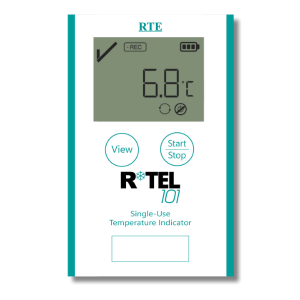
For shipments that require mid‑transit visibility, select single‑use indicators—like the RTEL 101 shown here—feature a clear LCD display that can be checked at any point in the journey. Operators can quickly toggle through maximum, minimum, and average trip temperatures using the large, tactile View button.
RTEL Indicators provide basic temperature excursion visibility in an affordable and easy-to-use format.
Indicators vs. Data Loggers: What Sets Them Apart
Purpose and Function
- Single‑Use Temperature Indicators — Simple pass/fail tools that confirm whether a shipment experienced a temperature excursion. No data storage or post‑shipment analysis.
- Temperature Data Loggers — Detailed monitoring devices that record temperature at preset intervals, creating a time‑stamped history of conditions throughout transit.
Visibility During Transit
- Indicators — Basic models show GO/NO‑GO status via LED; select models (e.g., RTEL 101) offer an LCD screen for maximum, minimum, and average temperature checks mid‑journey
- Data Loggers — Provide continuous, interval‑based data collection for full visibility before, during, and after transit.
Data and Reporting
- Indicators — No stored data; excursion status only.
- Data Loggers — Generate PDF or CSV reports for audit‑ready documentation, root‑cause analysis, and comparison against known failure points.
Complexity and Use Cases
- Indicators — Ideal for home medication deliveries and less stringent pharmaceutical, agriculture, and food‑grade shipments where quick verification is sufficient.
- Data Loggers — Preferred for pharmaceutical, food, and agriculture shipments requiring comprehensive monitoring, traceability, and documented temperature history.
RTEL Advantages
- RTEL Indicators — Affordable, easy to use, and available with optional mid‑transit visibility.
- RTEL Data Loggers — No proprietary software required; plug into any USB 2.0 port to access, view, and print reports. Offered in various formats.
Single-Use Temperature Data Loggers: Detailed Temperature Monitoring
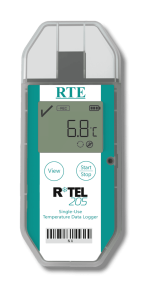
Single‑use temperature data loggers automatically capture and store readings at preset intervals—from 1 minute to 1 hour—providing a detailed record of temperature conditions throughout transit. Unlike simple indicators, which only confirm whether an excursion occurred, data loggers deliver in‑depth, time‑stamped insights that can be reviewed post‑shipment in a generated PDF or CSV report. This allows teams to evaluate temperature stability, identify fluctuations at critical hand‑offs, and compare results against known failure points.
RTEL data loggers require no proprietary software or peripherals. Simply connect the device to any desktop or laptop USB 2.0 port to access, view, and print the report.
Widely used across pharmaceutical, food, and agriculture supply chains, data loggers are ideal for shipments that demand comprehensive monitoring and documented analysis. RTEL offers several single-use data logger formats to support any cold‑chain transport requirement.
RTEL Data Loggers provide detailed, audit‑ready temperature records for complete shipment confidence.
How do RTEL indicators and loggers match up with FDA and CDC requirements?
RTEL Temperature Indicators and Loggers are engineered to:
- Ensure safe cold-chain deliveries
- Support regulatory compliance, including FDA regulation 21 CFR Part 11 for electronic signatures (Data loggers)
- Maintain product integrity throughout transportation
These features make them an ideal shipping solution for vaccines, pharmaceuticals, and other temperature-sensitive products

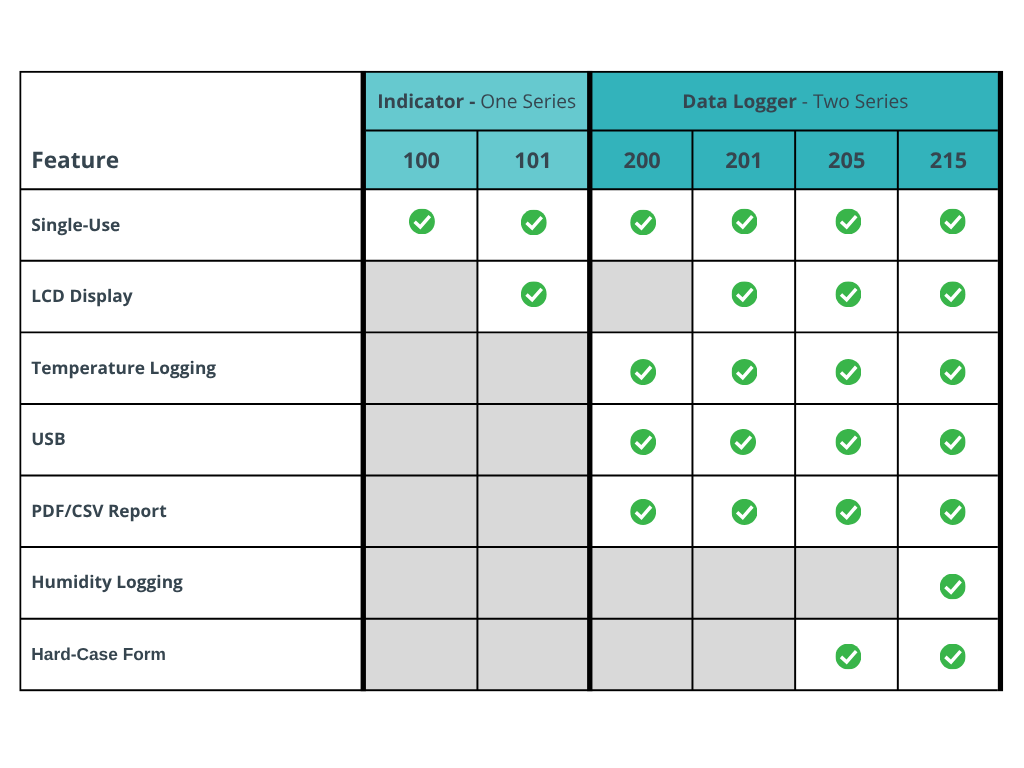
The RTEL Product Family — Which one is right for your needs?
Use Cases for Temperature Indicators and Data Loggers
Pharmaceuticals & Life Sciences
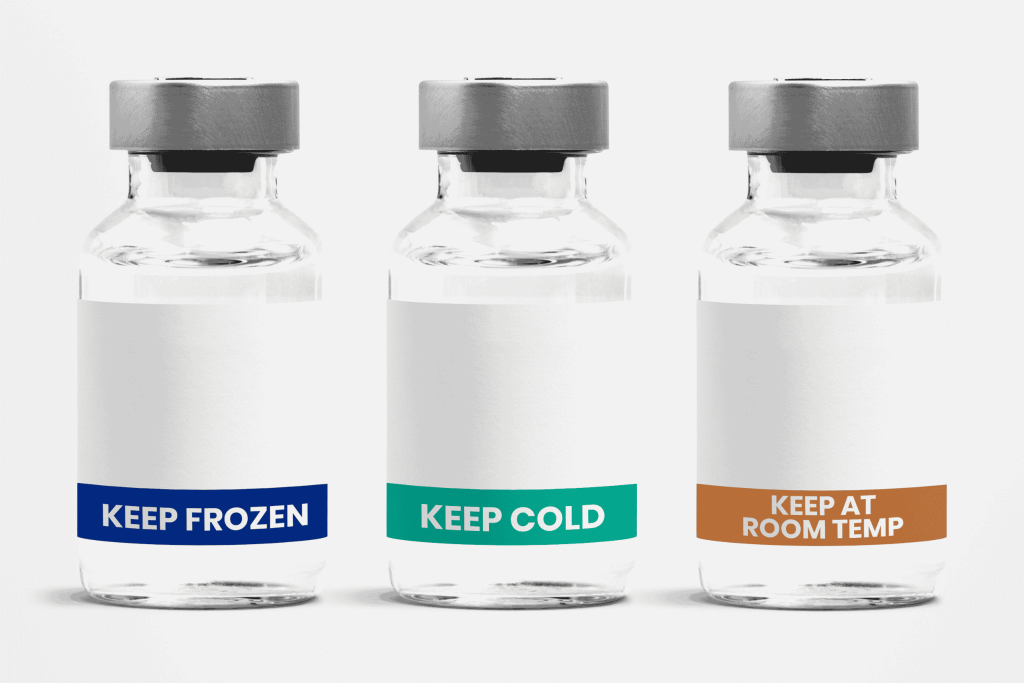
The Importance of Temperature Monitoring in Pharmaceutical Delivery.
Agriculture and Grocery
Are you ready to get started on the road to better shipment-level visibility? Ensure safe deliveries with RTEL temperature monitoring tools—engineered for compliance and product integrity. With over 40 years of cold-chain expertise, RTE delivers monitoring solutions trusted across industries.