

The Road to Automation for Small Terminals
Reefer monitoring: A logical stepping stone on the journey
Does terminal automation seem like too big a leap, especially if you’re a small reefer terminal operation? Consider starting with an easy first step that delivers measurable outcomes with relatively small investments. That’s right, we’re talking about reefer monitoring.
Let’s examine this logical stepping stone to greatness and what it takes to achieve it.
According to many trade outlets, the march towards digital transformation in the port sector is a slow one. While many encouraging signs are highlighted in some of the world’s largest terminals, our industry lags behind that of many other sectors, with slow adoption rates.
Smaller terminals are especially disadvantaged due to the extraordinary financial barriers to entry for full-on automation. However, these terminals can still compete and enjoy the benefits of certain aspects of automation when implemented in areas that are easy to initiate.
Take reefer monitoring, for example. At its most basic level, this process requires labor-intensive manual inspections, which can be inefficient and time-consuming. This inefficiency poses risks to data accuracy, safety, and cargo quality.
For smaller terminals looking to ease into automation, reefer monitoring presents a practical entry point. However, successful adoption requires careful planning and adherence to key implementation guidelines. Below are essential factors to consider when installing reefer monitoring automation.
Guidelines when considering reefer monitoring systems
- Assessment of Needs:
Before implementation can begin, terminals must first evaluate their current reefer monitoring process to identify inefficiencies, costs, and risks. Where are the most pressing bottlenecks, data lapses, or breakdowns in communication?
Common issues include a lack of visibility over reefer alarms, incomplete or inaccurate data collection, and crew safety while in the yard. While every terminal may face unique challenges, having a focus on where to start will help lead to better outcomes.
- Selection of Technology:
Various solutions exist, from hard-wired monitoring solutions to wireless communication systems. Selecting the right technology depends on budget, existing infrastructure, and specific operational needs.
Choosing a system based on personal bias for one technology over another may doom the entire installation and operational outcome due to incompatibility with the terminal environment.
An experienced advisor will help guide you through the options. They will provide valuable experience and insight into the different technologies and how each may interact within your environment. This is critically important.
- Integration with Existing Systems:
Many smaller terminals lack complex IT frameworks, so integrating reefer automation with their current systems needs careful planning to ensure compatibility. Many reefer monitoring platforms can operate as standalone systems. But knowing that it will grow as your terminal grows is critically important.
Plan for future technological expansion by ensuring the reefer monitoring system you choose is compatible with the most terminal operating software (TOS) platforms available.
- Installation & Deployment:
This step is the nuts and bolts of your effort into effective reefer monitoring. At this point, the best system for your environment has been chosen. If your environment includes racked reefers, monitoring devices will be installed at every reefer slot in each rack. Typical locations may be on steel columns or railings of the racks’ structure. All necessary wiring or cabling is run according to the system’s requirements.
If stacked reefers are your preferred method, hardware will include portable monitoring devices with magnetic backing plates that attach directly to each reefer’s end-frame. This makes attaching and detaching them easy when arranging each stack.
Depending on the system, other hardware like wireless gateways may also need to be installed in strategic locations within the yard to ensure strong and dependable communication across the network.
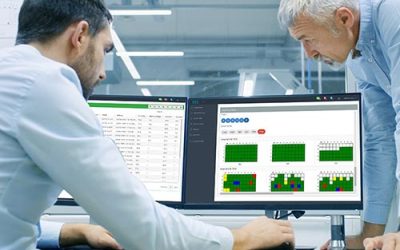
Your supplier will configure the backend monitoring software on a local or cloud-based server to provide a user interface and dashboard, offering real-time visibility over the connected reefers.
If your terminal utilizes a TOS system, integration will be coordinated to ensure a seamless deployment of the system that meets your needs.
- Training & Adoption:
Your staff will need training to transition smoothly from manual checks to automated reefer monitoring. Getting started with proper instruction on the system’s use will enable them to interpret and effectively act on the collected data.
Here’s where choosing the right vendor can make or break the success of the entire reefer monitoring implementation. Proper training and support at this stage ensures buy-in from all levels of your operation. This gives staff the confidence to effectively manage reefer monitoring systems, ensuring a smooth transition and maximizing the benefits of automation.
- Ongoing Maintenance and Optimization:
Wait, we’re not finished yet. Skipping this final step could lead to problems down the line. Any digital system requires regular software updates and performance evaluations. Doing so will maximize the system’s effectiveness and ensure its functionality for years to come. The monitoring vendor you choose should offer tiered maintenance packages tailored to your specific needs.
- Conclusion:
Reefer monitoring automation isn’t just about efficiency—it’s about safeguarding cargo, improving data accuracy, and streamlining operations. Whether you’re taking the first step toward automation or optimizing existing processes, finding the right solution is key.
Discover how innovative reefer monitoring systems from RTE can boost your terminal’s performance and set you on the right path toward automation. Start your automation journey today!
Latest blog posts

Take Command in ’26 – Positioning for a $28B Reefer Market by 2030
2026 isn’t just another year — it’s the year reefer operators either plug in or get left out. Operators who invest now won’t just keep pace; they’ll own the market by 2030. Let’s break it down.
The Smart-Yard Framework: 4 Questions to Guide Your 2026 Reefer Strategy
Ask yourself: “What type of reefer operation are we building?” This important first step tees up this 4-part framework for making smarter, scalable decisions regarding your reefer business.

Why Reefer Techs Trust RTE with Complex Controller Repairs
Reefer service techs are pros at diagnosing and fixing mechanical and electrical issues in mobile refrigeration systems. But electronic controllers? That’s a whole different ball game.

Reefer Monitoring: A Smarter Way to Build Trust
What if your reefer data could do more than just keep you informed? Often seen as an internal tool—reefer monitoring, can become a powerful customer-facing asset. Here’s how.