

How Small Misses Turn Into Big Claims — and What Terminals Can Do About It
You know the drill. Reefer cargo is unforgiving and requires careful handling and precise temperature control. It doesn’t care about your yard congestion, vessel delays, or the distance it’s traveled. Once it reaches your terminal, the responsibility shifts to you, and stakeholder expectations are high.
Failures can happen. But the reality is that most of them don’t stem from major mistakes but rather from small, hidden issues that pop up later. These are the ones that lead to spoiled cargo and costly claims.
Unfortunately, terminals are often unfairly blamed for problems beyond their control. Like the ones that occurred long before the reefer arrived. A common cause for many disputes isn’t carelessness; it’s a lack of visibility.
Let’s look at four subtle failure points that lead to reefer claims and see how real-time reefer monitoring can help terminals address them effectively. Can you relate to any of them?
1) Power Connection Gaps: The First and Most Common Failure Point
To those unfamiliar with the process, plugging in a refrigerated container may seem fairly simple, but to those in the know, it can be quite complex.
When things get busy at the terminal, delays in connecting refrigerated containers (reefers) to electrical power are possible. This gets really important for sensitive cargo, like fresh berries, which are very sensitive to temperature changes. A little delay in the electrical connection can cause them to warm up quickly. If the reefer had issues before it arrived, this can make it even more challenging.
Common electrical power-related issues may include:

- Delayed plug-ins during high-volume operations
- Faulty connections that appear to provide power but do not
- Breaker trips that silently disrupt the power supply
These issues might seem like small hiccups in the operation, but they can really mess with temperatures, leading to spoiled cargo and loss claims.
But what if this reefer had a bigger temperature problem upstream that may have started the spoilage process before the cargo ever reached your terminal? Without solid time-stamped records on your end, it could be tough to defend against any claims.
This is where real-time reefer monitoring changes the game.
When a unit loses power, even briefly, automated reefer monitoring, like RTE’s GRASP platform, flags it instantly and documents the exact time it occurs.
2) Incorrect or Unverified Setpoints: The Silent Temperature Risk
Setpoint errors are among the easiest to avoid when it comes to reefer issues, yet they happen all the time. What’s really troublesome for terminal operators is that many of these mistakes occur earlier in the cold chain.
Typical setpoint issues may include:

- Incorrect temperature values entered at the point of origin
- Inaccurate paperwork
- Controller keypad malfunctions
- Human error during manual inspections
- Setpoint drift after a power cycle or mechanical fault
Even when the terminal catches the error and corrects it, the reefer still needs time to stabilize. That recovery period can trigger alarms or temperature deviations that appear to be mishandling. This is, of course, unless you have the data to show otherwise.
Automated setpoint verification eliminates the guesswork. When the declared setpoint doesn’t match the actual controller value, GRASP flags it immediately, giving operators a chance to correct the issue before it becomes a problem.
3) Mechanical Issues That Masquerade as Operational Mistakes
This is the most unfair category of reefer failures, yet it’s the one that causes the most disputes.
A reefer can arrive at the terminal already compromised: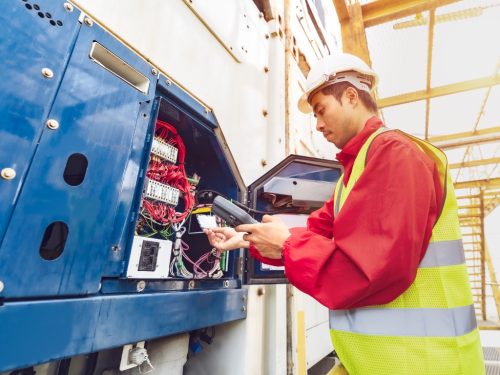
- Low refrigerant
- Compressor issues
- Faulty sensors
- Airflow obstructions
- Controller malfunctions
These problems can sometimes take a while to show up. A unit might seem to be running “fine” for hours, and then suddenly the temperature starts to drift out of range. When that happens, it’s usually the terminal holding the container that catches the blame for the temperature issue.
The tricky part is that without time-stamped historical data, it’s really tough to prove that’s not the case.
Real-time monitoring enables terminals to differentiate mechanical failures from operational errors.
When the collected data can show the unit was struggling before arrival, the narrative changes, and so does the outcome of the claim.
4) Record Deficiencies: The Achilles’ Heel of Reefer Claims Defense
Even when the terminal does everything right, incomplete documentation can undermine the entire defense.
Common documentation omissions include: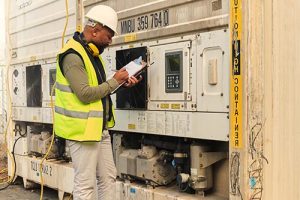

- Manual logs that vary by shift or operator
- Missing or inconsistent timestamps
- Too infrequent temperature inspections
- No record of when power was restored, or setpoints corrected
- Limited visibility into the reefer’s condition before arrival
In a dispute, the burden of proof frequently falls on the terminal. Without objective, time-stamped data, it becomes a matter of interpretation, and interpretation rarely favors the operator.
Automated monitoring solves this by creating a continuous, defensible record of every event.
Power status, temperature trends, setpoint changes, and mechanical anomalies are automatically captured, without relying on manual rounds.
The Common Thread: A Lack of Real-Time, Objective Visibility
These failure points stem from a single root cause: manual processes can’t keep up with the pace and complexity of modern reefer operations.
Terminals are high-volume, intense environments. Operators juggle vessel schedules, yard moves, gate traffic, and equipment constraints, all while trying to maintain perfect reefer conditions.
Without real-time visibility, even the best teams are forced to engage in reactive firefighting.
How Terminals Can Close the Gap
The solution is automated reefer monitoring. This tech isn’t just about adding another system to an already busy operation. It’s about giving terminal operators like you what you’ve always needed: real-time, clear visibility into every reefer you’re managing.
This is where RTE’s GRASP Reefer Monitoring Platform really stands out. GRASP is designed for the realities of marine terminals: the pace, pressure, volume, and unpredictability. It does more than just keep tabs on reefers; it coordinates the entire reefer workflow, helping operators stay ahead of issues instead of just reacting to them.
If you’re already using a Terminal Operating System, integrating GRASP makes everything flow smoothly. Every move, alert, and decision works in perfect harmony. For terminals, GRASP delivers:
Instant power‑loss detection
GRASP flags power interruptions the moment they occur — whether it’s a misplug, a loose connection, or a breaker trip. Operators know exactly when the event happened and how long the unit was without power.
Real-time temperature and setpoint monitoring
GRASP tracks actual temperature, return air, supply air, and declared setpoints in real time. If the setpoint is wrong or drifting, GRASP calls it out immediately.
Early identification of mechanical anomalies
Compressor struggling? Sensor fault? Unit failing to pull down after correction? GRASP sees the pattern long before a human can, and long before the cargo is at risk.
A unified, time‑stamped event history
Every power event, temperature trend, setpoint change, and alarm is logged automatically. No gaps. No missing notes. No “I think the plug‑in happened around 14:00.” GRASP gives terminals a defensible, audit‑ready record.
Fewer unnecessary mechanic dispatches
When GRASP shows the unit is mechanically compromised — not operationally mishandled — terminals avoid wasted labor by dispatching the most appropriately skilled crews for the job and focusing technicians where they’re more suitably needed.
A shift from reactive to proactive reefer management
Instead of chasing alarms, operators manage by exception. Instead of defending themselves in claims, they present objective data. Instead of hoping for visibility, they have it.
And yes — GRASP delivers these results better than any other solution. Because it wasn’t built as a generic IoT platform or a retrofitted tracker. It was built specifically for reefer operations by people who understand the stakes, the workflows, and the pressure operators face every day.
Here’s how RTE can help.
Ready to see how GRASP can improve your reefer operations? https://www.rte-usa.com/grasp/
Glossary
Reefer (Refrigerated Container) – A temperature‑controlled shipping container used to transport perishable goods such as produce, meat, pharmaceuticals, and frozen cargo.
Setpoint – The target temperature programmed into the reefer’s controller. If the setpoint is incorrect, the cargo may be cooled or heated to the wrong temperature.
Temperature Excursion – Any deviation from the required temperature range. Even small excursions can trigger alarms, claims, or cargo spoilage.
Power Loss / Misplug – When a reefer loses electrical power due to a loose connection, incorrect receptacle, breaker trip, or delayed plug‑in.
Pull‑Down Time – The period a reefer needs to return to its correct temperature after a setpoint correction or power interruption.
Mechanical Failure – Issues such as compressor faults, low refrigerant, sensor errors, or airflow blockages that prevent the reefer from maintaining temperature.
Real-Time Monitoring – Automated, continuous tracking of reefer conditions as they occur — including temperature, power status, alarms, and setpoints — without relying on manual inspections.
Event History / Digital Traceability – A time‑stamped record of all reefer activity, used for operational visibility and claims defense.
Terminal Operating System (TOS) – The core software platform that manages a terminal’s vessel, yard, gate, and equipment operations.
FAQs
Why do small operational misses cause such big reefer claims?
Because reefer cargo is highly sensitive, even short temperature deviations can trigger alarms or spoilage. Without continuous, real-time data, it’s difficult to prove when or why the deviation occurred, leaving terminals exposed.
Where do most reefer problems actually originate?
Upstream. Many issues begin at the point of origin, during inland transport, or before the reefer ever reaches the terminal. But without historical visibility, terminals often get blamed.
Why are setpoint errors so common?
Because setpoints rely on human entry, paperwork accuracy, and controller reliability. Any break in that chain, even a small one, can lead to incorrect temperatures.
How does real-time monitoring help with claims defense?
It provides objective, time‑stamped data showing exactly what happened, when it happened, and how the terminal responded. This eliminates ambiguity and strengthens the terminal’s position.
Can automated monitoring replace manual reefer inspections?
It doesn’t replace operators; it empowers them. Instead of walking the yard looking for problems, operators focus on exceptions and high‑value tasks.
What makes GRASP different from other reefer monitoring systems?
GRASP is purpose‑built for marine terminals. It integrates power monitoring, temperature tracking, setpoint verification, mechanical insight, digital documentation, and even electrical power usage into a single unified platform, delivering the speed, accuracy, and reliability terminals need.
Does GRASP reduce labor or just add another system to manage?
It reduces labor by eliminating unnecessary inspection rounds and reducing avoidable mechanic dispatches. Operators manage fewer tasks with more confidence.
Learn More
Explore related topics to strengthen your temperature monitoring strategy:
• RTE Reintroduces the RTEL Brand of Temperature Indicators and Data Loggers
• RTEL cold-chain visibility for agriculture and grocery supply
• GCCA joins FSMA 204 collaboration to improve food traceability across the cold chain
• US FDA Food Traceability List
Latest blog posts

FSMA 204 Raises the Bar. Temperature Data Is the Key to Closing the Gap.
FSMA 204 is reshaping food traceability. Learn how RTEL temperature data loggers strengthen KDE documentation, support audits, and improve cold‑chain compliance.
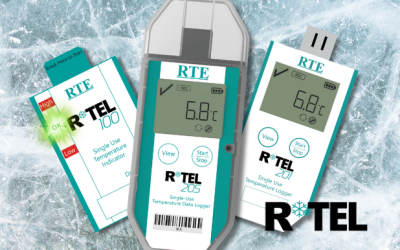
RTE Reintroduces the RTEL Brand of Temperature Indicators and Data Loggers
See how RTE is strengthening cold‑chain visibility across pharmaceuticals, food, and agriculture.
Your Biggest Cold Treatment Vulnerability Isn’t Temperature—It’s Documentation
Cold Treatment exposes every gap in your cold chain. With risks like rejected cargo or re‑exports, “good enough” monitoring isn’t enough. Here’s how technology can close those gaps and deliver the documentation accuracy you need to succeed.

Take Command in 2026 – Positioning for a $28B Reefer Market by 2030
A strategic breakdown of the five levers shaping the future of reefer operations — reliability, visibility, sustainability, compliance, and partnerships — and how terminals can lead a $28B market by 2030.