

The Reality Behind “Validated” Packaging in Real‑World Shipping Conditions
They’re influenced by route variability, handoff delays, truck conditions, warehouse dwell time, and the simple reality that no two shipments experience the same environment. That’s why temperature data isn’t a “nice to have” — it’s the only way to know what actually happened inside the box.
What Passive Packaging Is Designed to Do
At its core, passive packaging is a thermal buffer. It slows down heat transfer long enough for a shipment to reach its destination. The system relies on:
- Insulation (EPS, PUR, VIP panels)
- Phase change materials or gel packs
- A defined pack-out configuration
- A validated duration under specific conditions
On paper, these systems can hold temperature for 24, 48, or 72 hours. In practice, the environment rarely matches the assumptions.
Where Passive Packaging Fails in the Real World
Most excursions don’t happen because the packaging is “bad.” They happen because the real world doesn’t behave like a validation report.
Common failure points:
-
Extended dwell time during sortation or customs
-
Hot trucks during last-mile delivery
-
Improper pack-out when teams are rushed
-
Seasonal swings that exceed the design envelope
-
Unexpected delays (weather, staffing, reroutes)
-
Door-open events at distribution centers
Passive packaging can only slow heat transfer — it can’t stop it. Once the coolant is spent, the box is on its own.
Why Temperature Data Loggers Matter
A passive shipper can’t tell you what happened inside it. A temperature data logger can. When a shipment arrives warm, you need more than a guess. You need:
- A timestamped record of the excursion
- Proof of compliance for audits
- Evidence for carrier claims
- Insight into where the risk occurred
- Data to adjust pack outs or routes
Without a logger, you’re blind. With one, you have a complete chain-of-custody story.
The Operational Reality: Every Route Has Its Own Microclimate
Two identical boxes shipped on the same day can experience completely different temperature curves. One might sit on a shaded loading dock; the other might bake on a tarmac. One might move quickly through a hub; the other might get held for inspection.
This is why operators rely on data — not assumptions.
Temperature loggers turn passive packaging from a “hope it holds” system into a measurable, improvable process.
How RTEL Loggers Fit Into Passive Packaging Workflows
RTEL temperature data loggers are built for exactly this environment:
- Small enough to fit any insulated shipper
- Accurate enough to capture short-duration spikes
- Simple enough for pack out teams to deploy consistently
- Robust enough for multi-day routes
- Fast enough to give receiving teams immediate answers
Loggers don’t replace passive packaging — they make it accountable.
The Bottom Line
Passive packaging is essential. But it’s not perfect. And it’s not predictable.
Temperature data is what closes the gap between how a shipper was supposed to perform and how it actually performed.
If you’re shipping temperature-sensitive products — food, ingredients, pharmaceuticals, biologics, clinical diagnostics, or anything with a defined range — you need both:
- A validated passive packaging system
- A reliable temperature data logger inside every box
That’s how operators reduce risk, protect product, and stay compliant.
Ready to See What’s Actually Happening Inside Your Passive Packaging?
Put an RTEL Temperature Data Logger in one or two lanes to get real shipment data, not assumptions. Start validating your passive packaging performance with confidence.
Glossary
Passive Packaging
Insulated shipping systems that maintain temperature without active cooling. They rely on insulation, coolant packs, and a validated pack-out configuration to slow heat transfer during transit. Performance varies widely in real-world conditions, making temperature data essential for verifying actual shipment behavior.
Active Packaging
Temperature-controlled systems that use powered refrigeration or heating to maintain a defined range. More predictable than passive packaging, but heavier, more expensive, and less common in last-mile or parcel-based cold-chain workflows.
Temperature Excursion
Any period during which a shipment’s internal temperature falls outside its acceptable range. Excursions often occur during dwell time, last-mile delivery, or unexpected delays. A data logger provides the only verifiable record of when and where the excursion occurred.
Phase Change Material (PCM)
A coolant material engineered to melt or freeze at a specific temperature. Used in passive packaging to stabilize internal conditions. PCM performance depends on proper conditioning and pack out.
Pack Out Configuration
The specific arrangement of product, coolant, insulation, and void fill inside a passive shipper. Small deviations in pack-out can significantly affect thermal performance.
Lane Validation
The process of testing a shipping route under real world conditions to confirm that packaging, coolant, and handling practices maintain temperature. Requires temperature data to document performance.
Cold-Chain Integrity
The ability of a shipment to maintain the required temperature from origin to destination. Integrity depends on packaging, handling, dwell time, and environmental exposure, and can only be verified with temperature data.
Chain of Custody (Temperature)
A documented record of temperature conditions throughout a shipment’s journey. Essential for audits, compliance, and root cause analysis. Generated automatically when using temperature data loggers.
Dwell Time
The period a shipment sits stationary during transit, at hubs, docks, customs, or staging areas. A major driver of temperature excursions in passive packaging.
Thermal Buffer
The insulation and coolant system inside passive packaging that slows heat transfer. A buffer buys time — it does not guarantee stability without monitoring.
Insulation Types Used in Passive Packaging
Passive packaging relies on insulation to slow heat transfer and protect temperature sensitive products. Common insulation types include:
- EPS (Expanded Polystyrene): Lightweight, cost effective, suitable for short duration shipments.
- PUR (Polyurethane Foam): Higher thermal performance, better suited for longer routes.
- VIP (Vacuum Insulated Panels): Premium insulation offering the longest hold times and highest stability.
Each insulation type behaves differently under real-world conditions — which is why temperature data loggers are essential for verifying actual performance on your shipping lanes.
FAQs
Do I need a temperature data logger if I’m already using validated passive packaging?
Yes. Validation shows how packaging performs under controlled conditions. Real world shipments rarely match those conditions. A data logger verifies what actually happened inside the box — not what was expected to happen.
How long can passive packaging maintain temperature in real‑world conditions?
Performance depends on insulation type, coolant mass, pack‑out, ambient conditions, and route variability. A “48‑hour” shipper package may hold for 48 hours in testing but fail in 30 hours on a hot route with extended dwell time. Only temperature data can confirm real performance.
Where do most temperature excursions occur, and why does it matter?
Common hotspots include sortation hubs, customs holds, last‑mile trucks, and loading docks. These unpredictable environments are where passive packaging is most likely to fail — and where temperature data becomes essential.
How many shipments should I test before trusting a passive packaging system?
Most operators start with one or two pilot lanes to establish baseline performance. If the data shows consistency, they scale. If not, they adjust pack‑out, coolant, or routing.
Will a temperature logger affect my pack‑out or slow down my workflow?
No. RTEL loggers are compact, easy to activate, and designed to integrate into pack‑out with no added time. Large tactile buttons provide a positive response, and readout is fast.
What happens if a shipment arrives out of range?
A data logger provides a timestamped record of the excursion, helping you determine root cause, file carrier claims, and document compliance. Without data, you’re left guessing.
Related Articles
FSMA 204 Raises the Bar. Temperature Data Finally Closes the Gap – What operators need to know as temperature traceability expectations shift across the food chain

Reefer Data Is Becoming Terminal Data. And That Changes Everything
Automated reefer monitoring is no longer a niche tool. Discover why reefer data is becoming core terminal infrastructure and how operators are using it to improve planning, safety, transparency, and claims defensibility.
The Hidden Failure Points in Reefer Handling
Discover the hidden failure points in reefer handling operations and how terminals can prevent power, setpoint, and mechanical issues.

FSMA 204 Raises the Bar. Temperature Data Is the Key to Closing the Gap.
FSMA 204 is reshaping food traceability. Learn how RTEL temperature data loggers strengthen KDE documentation, support audits, and improve cold‑chain compliance.
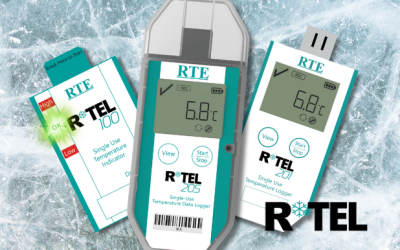
RTE Reintroduces the RTEL Brand of Temperature Indicators and Data Loggers
See how RTE is strengthening cold‑chain visibility across pharmaceuticals, food, and agriculture.