

Reefer volumes haven’t slowed — not in 2022, not in 2024, and certainly not today.
Global demand for fresh produce, protein, and temperature‑controlled pharmaceuticals continues to climb, and terminals everywhere are feeling the strain. More cargo owners are relying on refrigerated containers to move high‑value, high‑risk loads, and they expect terminals to keep pace.
Many ports respond the same way: add yard space, add plugs, add capacity.
But in 2026, that’s no longer enough.
Reefers Aren’t Just Containers — They’re Live Assets
Dry containers can sit. Reefers can’t. Every unit is a live, powered, data‑producing asset carrying cargo that can spoil, lose value, or trigger claims if anything goes wrong.
Operators already know the drill: temps, power, mechanical health, alarms, instructions, timestamps — every datapoint matters, and every one has to be right.
The problem is that traditional workflows still rely heavily on manual inspections. People walking the yard. People recording data. People catching issues when they happen to be standing in front of the right box at the right moment.
Even the best teams can’t eliminate:
- Missed or delayed inspections
- Incorrect setpoints or unclear instructions
- Documentation errors
- Units that were never plugged in
- Mechanical failures that go unnoticed for hours
In a world where cargo owners expect precision, “good enough” isn’t good enough anymore.
The Modern Reefer Yard Runs on Real‑Time Data
Automated reefer monitoring has shifted from “nice to have” to “baseline infrastructure.” Terminals that adopt remote monitoring aren’t just adding technology — they’re removing risk.
With centralized, real‑time visibility, operators gain:
- Instant alerts when temperatures drift
- Power status monitoring to catch unplugged or tripped units
- Energy usage insights for cost recovery and planning
- Remote setpoint control to eliminate instruction errors
- Accurate, time‑stamped records that reduce claims exposure
This isn’t about replacing people. It’s about giving operators the tools to scale safely, confidently, and profitably.
Capacity Is More Than Plugs — It’s Control
Adding plugs increases throughput. Adding monitoring increases reliability, accountability, and value.
Terminals that combine both are the ones positioned to win the next wave of reefer growth — especially as cargo owners become more selective about where they place their high‑value loads.
Ready to explore what an automated reefer monitoring solution could look like in your terminal?
Glossary
Reefer (Refrigerated Container) – A temperature‑controlled shipping container used for food, pharma, and other sensitive cargo.
Live Asset – A reefer unit that continuously produces operational data — temperature, power draw, alarms, and mechanical status.
Manual Inspection – Traditional workflow where technicians physically walk the yard to check reefer status, often leading to missed issues.
Temperature Drift – A gradual change in internal reefer temperature that signals early risk before a full excursion occurs.
Remote Setpoint Control – The ability to adjust a reefer’s temperature settings digitally without physically accessing the unit.
FAQs
Why aren’t more plugs enough to support reefer growth?
Because plugs increase capacity, not control. Without real‑time monitoring, terminals still face missed alarms, incorrect setpoints, documentation gaps, and mechanical failures that go unnoticed.
Why are reefers considered “live assets”?
Reefers constantly produce temperature, power, and mechanical data. Any deviation can spoil cargo or trigger claims, making continuous visibility essential.
What problems come from manual reefer inspections?
Manual rounds lead to missed or delayed inspections, unclear instructions, documentation errors, and units that appear plugged in but aren’t actually drawing power.
How does automated reefer monitoring reduce risk?
It provides instant alerts, power‑status visibility, remote setpoint control, energy‑usage insights, and accurate time‑stamped records that strengthen claims defense.
Latest blog posts
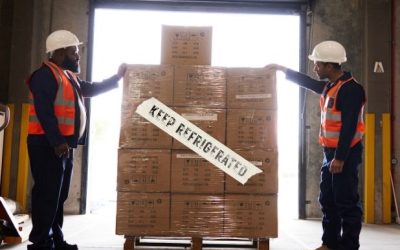
Where cold-chain failures really happen
Cold‑chain failures hide in the gaps—loading docks, transfers, last‑mile handling. Product‑level temperature data reveals excursions, protects shipments, and gives shippers defensible proof.
Reefer Failures Are Expensive – Automation Stops Them Before They Start
Reefer growth isn’t solved by only adding more plugs. Reefers are live assets that demand real‑time monitoring, not manual checks. Learn why automated visibility, instant alerts, and remote control are now baseline infrastructure for terminals facing rising cold‑chain demand.

The Hidden Cost of One Missed Reefer Alarm
The most dangerous alarm is the one no one sees. Missed alerts → aging issues → preventable failures. Let’s break down why critical signals slip through the cracks and how high‑performing yards 𝘀𝘁𝗼𝗽 𝘁𝗵𝗲 𝗱𝗼𝗺𝗶𝗻𝗼𝗲𝘀 before they fall.
Reefer Data Is Becoming Terminal Data. And That Changes Everything
Automated reefer monitoring is no longer a niche tool. Discover why reefer data is becoming core terminal infrastructure and how operators are using it to improve planning, safety, transparency, and claims defensibility.